Well,
here goes.
A little history.
A lot still to build.
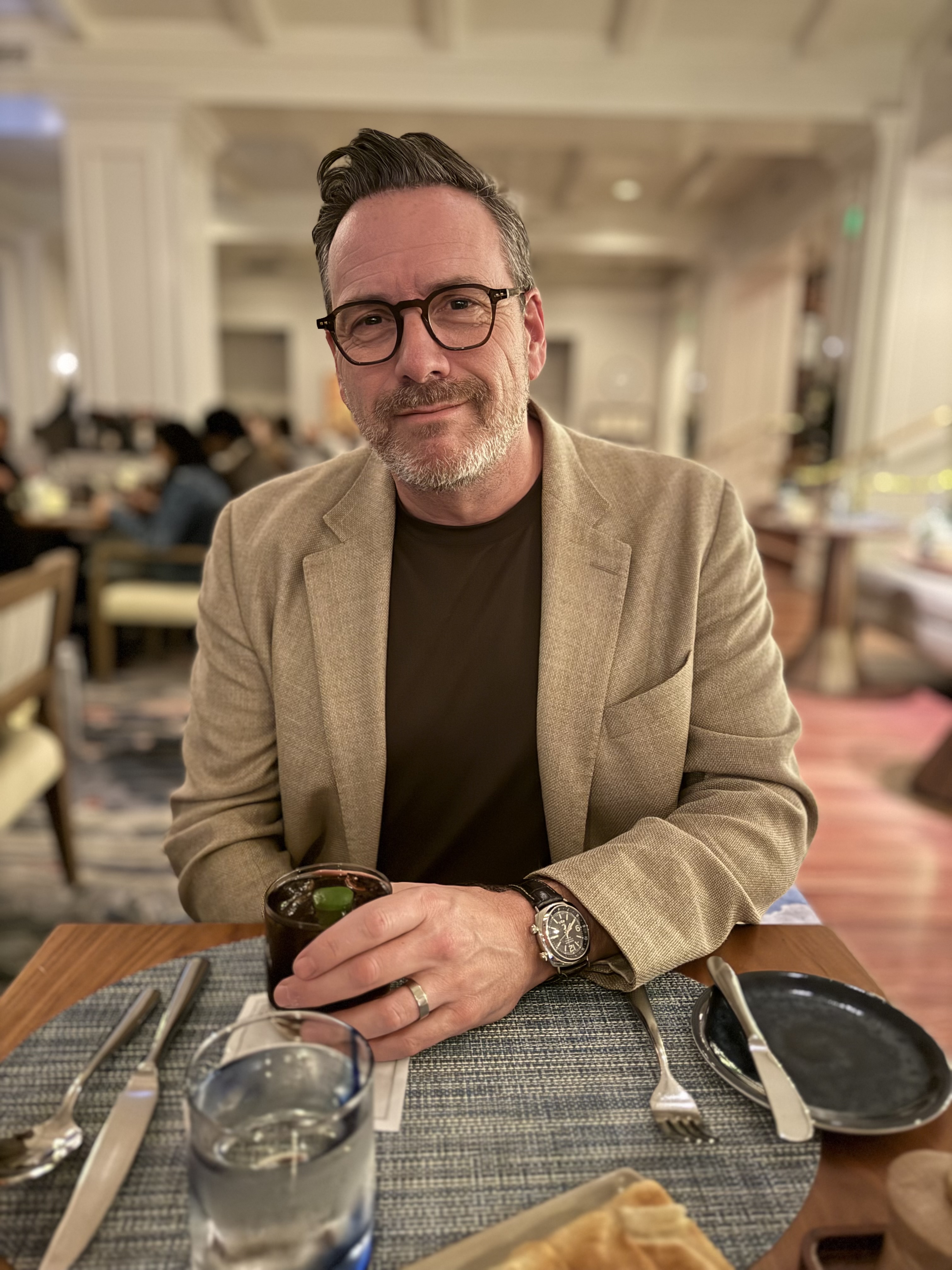
I’ve got a lot on the go, and I wanted somewhere to talk about it.
I used to blog almost every day. I miss it. I’ve become increasingly uncomfortable making X the home of my public voice, and LinkedIn has lost much of its value to me beyond the audience it reaches. So I’m starting here, under my own name. Some thoughts, some projects, and a fair bit of learning out loud.
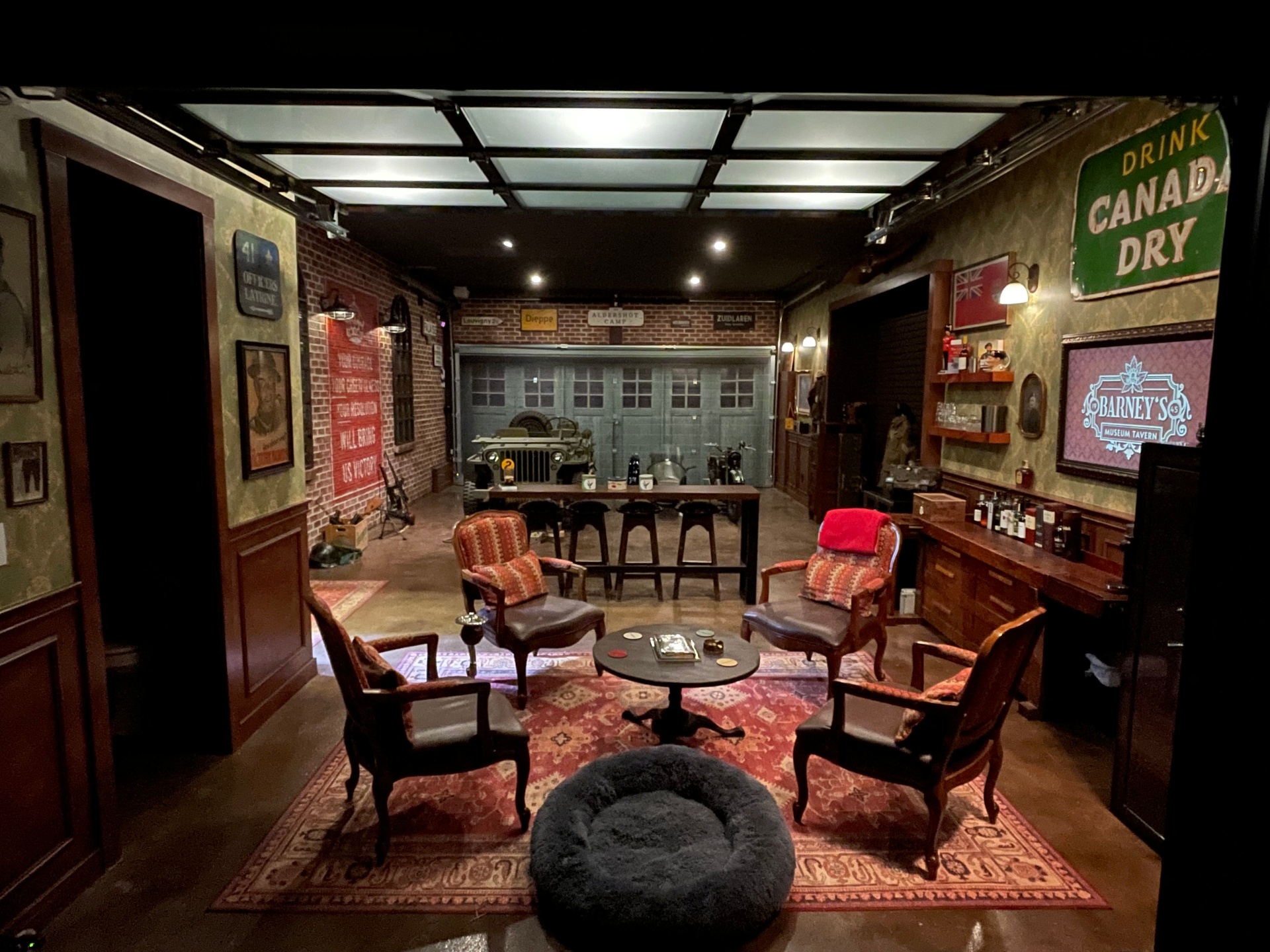
A room full of history.
A place for conversation.
If you want to understand the mix, Barney’s Tavern is a decent place to start.
I built a tavern in my house, named for my grandfather, Bjarne ‘Barney’ Tangen, who served with the 8th Canadian Reconnaissance Regiment in the Second World War. It’s where I sit down with interesting Canadians and give a conversation the time it deserves.
I’m a collector. I spend a lot of time thinking about the Second World War, the people who lived through it, and the decisions they faced. One of the pieces I own is a signed copy of Churchill’s ‘The Defence of Freedom and Peace’, also known as ‘The Lights are Going Out’. He delivered it in October 1938. These things matter to me because of the people and choices behind them.
The Defence of Freedom and Peace
Winston Churchill · October 1938
Also known as “The Lights are Going Out”
Lately, I’ve been thinking about that history more than usual. Relationships I thought were settled—our allies, our trading partners, our place in the world—feel less certain. I never expected to be asking some of these questions about Canada’s future. Here we are.
I want to write about what makes this country more capable: the businesses we build, the skills people can carry across it, the institutions we rely on, and the choices we make with public money. That includes Edmonton. I think our city is in a tough spot, and I care enough to ask difficult questions.
You’ll hear about the economic system and Bitcoin, too. These are subjects I want to explore and debate, alongside the practical work I’m doing. I’m interested in a good conversation, including with people who see things differently.
“At 55, I’m learning to build things I’ve been thinking about for years.”
A few things
on the go.
AI is changing everything about how I work. At 55, I’m learning to build things I’ve been thinking about for years. GitHub, Jira, teams of agents working overnight. There’s a whole new vocabulary, and I’m having a ridiculous amount of fun figuring it out.
We Know Training
Making our company AI-native: roughly 200 training storefronts, seven publishers, and our people learning to build better ways of working across the business.
Explore project 02Oliu® + CCTA
Oliu® and the Canadian Credential Trust Alliance: working toward a Canadian network for verifiable, portable credentials.
Explore project 03Copernicus™ + ReadyEngine™
Helping learners discover what they know, find the gaps and prepare with greater confidence. Our current focus is the skilled trades.
Explore project 04Montreal · D-Day 2027
Helping the Juno Beach Centre team build the next gala in Montreal. Remembrance is a living part of my work.
Explore project
Then
there’s Kay.
Kay takes her name from Kay Summersby, Eisenhower’s wartime aide and driver. The inspiration is the person beside you who understands the context and helps things happen.
I’m basically treating my life like a product. KayOS™ is the operating system I’m building around it. Kay is my virtual chief of staff. The Second Brain is the knowledge she should be able to work from.
My context.
A team of agents.
Select a part of the system to see how it is intended to work. This is an illustrative concept.
I direct Kay from my phone. Permitted context informs her work. She coordinates the specialists.
Context, priorities, delegation.
Kay is the virtual chief of staff I’m building: a coordinator that understands the context, helps set priorities and brings in specialist agents. The ambition is useful follow-through within clear boundaries.
Concept, not a live feature map. Connections roll out in stages. This page does not connect to the private vault or run agents.
Think of it as a personal Wikipedia: a growing, connected library of the people, projects, decisions, documents and stories that make up my life.
A note becomes part of a project’s history. A decision keeps its date and the reasons behind it. A family story connects to the people and photographs that give it meaning. The original sources stay available, and I can correct what the library gets wrong.
As that context improves, the agents should become more useful: better informed about what I mean, what I’ve already tried and what matters to me. More context doesn’t automatically make an answer true. I want to see where an answer came from, what is uncertain and what needs my judgment.
Barney’s Tavern
A tavern in my house, named for my grandfather. A place to sit down with interesting Canadians and give a conversation the time it deserves.
Inspect the original source ↗
Public source example. The private library is not connected to this page.
How the Second Brain grows.
I don’t want this to depend on me remembering to file everything. With access I explicitly permit, I want Kay to draw context from personal email and calendars, productivity tools, corporate Microsoft 365, Granola meeting notes, proposals and documents. Public reading and social listening would add another layer. The aim is to bring the useful record of my day into one connected library.
Collecting is only the beginning. Kay should help decide what is relevant, what deserves attention and how it connects to what is already there. Entries should keep their source and date, distinguish a decision from a suggestion, and flag conflicting or uncertain information. Work and personal material need their own permissions. Recording a meeting or using company information also needs the appropriate permission.
That’s the Wikipedia idea: context that keeps growing, organized so it can be found, connected and used—almost like a personal data warehouse. My bet is that giving agents useful context earlier will help us perform better. But volume alone isn’t the advantage. The advantage is context we can trust, correct and put to work.
This is the ingestion model I’m building toward. These connections are not all live, and this public page cannot access my email, meetings or private library.
The ambition is a high degree of autonomy within clear boundaries. Kay coordinates specialist agents: research, administration, writing, bookkeeping and the practical work of following through. Each gets the context and tools its job requires.
From my phone, I want to ask a question, capture a thought, inspect the source, correct a memory or review a proposed action. I want the system to keep moving useful work forward without making me supervise every small step.
That makes the design of permissions essential. Private spaces stay separate. Sharing is deliberate and revocable. Encryption, dependable backups, an activity record and human review for consequential actions are requirements I’m building toward. My private vault is not a public website feature.
These are design requirements I’m building toward, not security claims about this prototype.
The point is to be a better father, grandfather, husband, community member and business owner. There’s a Mac Studio in Barney’s Tavern that I’d like to make part of this. I enjoy the idea that a room full of history could also help me build a useful record of the life still ahead.
Eventually, my grandchildren might explore my stories through a clearly identified ‘Virtual Grandpa’. Someone I work with might ask a carefully limited public Kay about an idea I’ve chosen to share. Those are ambitions, with permissions to work out—not things this page can do today.
I’ll share the tools, experiments and code when I can. I also want to compare notes with people learning to do this themselves.
Subscribe if you’re curious.
Let’s see where this goes.
Some posts will be mine alone. Others, like this expanded introduction, will be developed with AI assistance. Anything under my name is reviewed, approved and owned by me. Automated Kay posts will be labelled.
Developed by Chris with AI assistance from Kay.
Recent news brought me back to a substantial piece on Edmonton’s waste management history.
Choose the five-minute overview or explore the full analysis in about 45–50 minutes. Allow extra time to follow the sources.